TLDR: Something will change on your addition. Across 92 approved change orders on our projects, the net effect was about 2% of contract value, 19 of them handed money back to the client, and 82% of the dollars added were things the client decided to add. Every builder promises the price will hold. What matters is what happens in the hours after something changes.
Two ways a project changes
Four months into an addition, one of two things happens.
You change your mind. You stand in the framed opening, see the room at full size for the first time, and the light fixture you picked in February is wrong.
Or we find something. A drain pipe under the slab has collapsed. The city wants radon mitigation. The gas meter has to move and the lines have to follow it.
Homeowners brace for the second one. In our ledger, the first one is far more common. Of the dollars added by change order across our projects, 82% came from decisions our clients made, not from conditions we uncovered. That is not a complaint. A homeowner standing in a half-built room should be allowed to change their mind. It only becomes a problem when nobody writes it down.
What actually happens after something changes
Almost every renovation horror story is a story about these steps happening out of order.
When you ask for the change
We price it before you see it. That means going back to the trade whose scope is affected, or to a different trade entirely if the work belongs to someone else, and getting a real number. Only then does a change order reach you, with the scope of work and the price finalised.
That is also the honest answer to how long it takes. A change order cannot reach you until the trade has priced it: a day or two on a small item, longer if it needs a site visit or a supplier quote. Nothing stalls more often than a change order waiting on a busy crew, which is why we chase them.
When we find the change
The same sequence, with one exception. If it is a genuine emergency that cannot wait for an answer, the work gets done. Water does not schedule itself around an approval workflow. Everything that can wait goes through the same loop.
Then the part you never see
Your approval is not the last step. It is the trigger for the next document.
Once you approve the change order, we issue a purchase order to the trade doing the work. That purchase order is a binding agreement between us and that subcontractor covering the work shown, and it is the reason your approved number holds. Without it, a trade has an instruction and no agreement, and an instruction is something people remember differently three months later.
Our rule is short. No work is done on our jobsites without an order approved by the client and a purchase order issued to our subcontractor. Neither document alone is enough. The approval without the purchase order means the trade never formally agreed to the scope or the price. The purchase order without the approval means we committed your money without asking you.
That rule got its last push from something small. We ordered gravel for one of our sites before a purchase order had been issued for it. The material arrived, the work got done, and then the cost had nowhere to sit. With no purchase order attached, it could not be coded cleanly against the project. Nobody lost money over it. It showed us the gap, and the message went to all 23 of our trades: no purchase order, no payment. The rule holds on materials the same way it holds on labour.
What most homeowners get wrong about change orders
Most people treat a change order as the moment the builder starts taking more money. That assumption is what makes homeowners sign things they have not read, because arguing feels worse than the number.
Look at an actual change order ledger. Of 92 approved change orders on our projects, 19 were credits, money coming back off the contract. A client removed the toilets themselves. Another supplied their own door hardware. One dropped a backsplash. On one project the temporary hydro pole came out of the scope and six thousand dollars came off the price.
A credit could be quietly netted off at the final invoice and nobody would ever know. We issue it as a formal change order for the same reason we issue the additions that way. A contract that only moves in one direction is not a process, it is a sales tool.
The second thing people get wrong is thinking approval is a formality. It is not. You can deny a change order. Work does not proceed on a denied change order, and the item comes back to you re-priced or it comes off the table.
What the numbers actually look like
Homeowners should see these. The alternative is a builder saying it depends and leaving you to guess.
Across our projects with a signed contract and a change order history:
Change orders added a net 2% of contract value on average, after credits
On additions specifically, the net was 3.6%
The range runs from projects that finished below their contract price to one small basement that ran above 13%
82% of the dollars added were client-initiated, not site conditions
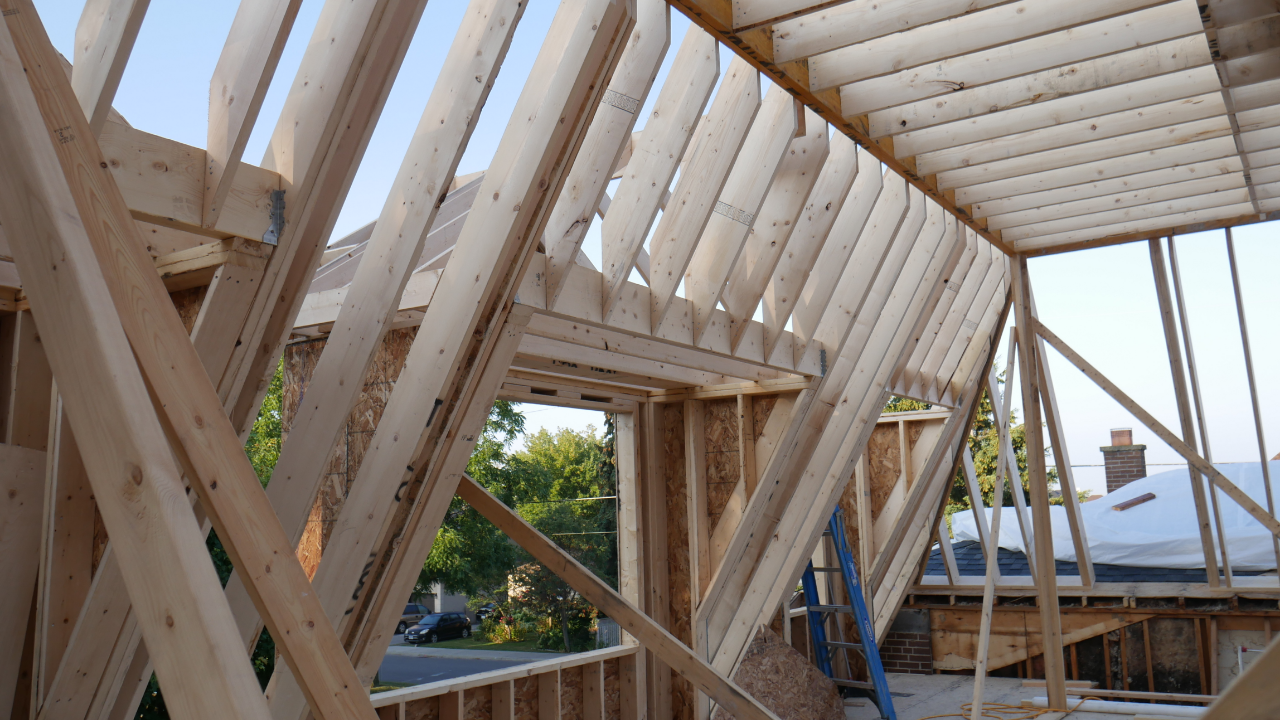
The spread between projects is the part worth understanding, because it is mostly under your control. The jobs at or below their contract price had their selections priced against real quotes before anyone broke ground. The jobs at the top of the range were still making decisions while trades were on site. On our Glen Road addition the client changed the mansard from shingles to a slate metal roof and moved from stucco to precast, mid project, by choice. Those two decisions are most of that project's change order total.
Carry a contingency that matches your stage. At preliminary estimate, before anything is properly procured, hold 5% to 10%. Once the budget is fully procured against real quotes, 1% to 3% is realistic. Any builder who tells you a fully procured budget needs no contingency is telling you something about their record keeping, not about your project.
The ones we pay for ourselves
Five change orders in our system are our own misses. Attic spray foam that should have been in the original scope. A masonry opening we did not price. Plaster and paint repairs after nicks appeared on a finished wall.
None were billed to a client. They sit in the system because the cost was real and had to be recorded somewhere. It came out of our margin. That is the whole mechanism behind a fixed price: our mistake is our problem, your change is yours, and the paperwork tells you which is which.
Why we ask you to work in our software
We are a technology heavy builder, and we are built that way on purpose. The software is how a fixed price stays fixed. Every change, every approval, every purchase order and every day of site photos sits in one place you can open from your phone, which means nothing about your project depends on somebody remembering a conversation.
That does not mean you will not hear from us. We still call. We are still on site. What you do in the platform is straightforward: you review the documents that need your decision, your budget and your change orders, you see the photos from your site, and when you have a question you send it once and the whole team sees it rather than it sitting in one person's inbox.
If learning one piece of software is not something your family wants to do, we are not the right builder for you, and we would rather say so at the first meeting than six months in. We know what the other version looks like because we lived it. When we first moved everything into our project management system, some clients were already mid build and did not want to learn it. Those projects ran late, the information scattered across email threads, and the change orders and purchase orders became very difficult for anyone to keep track of, us included. Clients who see the portal at the first meeting do not push back on it, because by then they can see what it does for them.
Projects succeed or fail on how the flow of information is handled. Our own late projects were the ones where it lived in email threads. Whether you are adding to a semi in East York or a bungalow in Scarborough, that is what decides how your build feels.
Key Takeaways
A change order should reach you already priced by the trade doing the work, with the scope written out. If it arrives as a number in an email, the pricing has not happened yet.
Your approval triggers a purchase order to the trade. Both documents have to exist before anyone starts, and a builder who cannot show you both does not have a process.
Change orders move in both directions. On our projects, 19 of 92 gave money back to the client.
Expect a net 2% to 4% of contract value in change orders on a well procured addition. Carry 5% to 10% at estimate stage and 1% to 3% once procured.
Most of what gets added is chosen by the homeowner, not discovered by the builder. Decisions made before the trades arrive are the cheapest ones you will make.
Frequently Asked Questions
How much do change orders usually add to a home addition? On our projects, a net 2% of contract value on average after credits, and about 3.6% on additions. Carry 5% to 10% while your budget is still an estimate and 1% to 3% once it is fully procured against real quotes.
Can I say no to a change order? Yes. A denied change order does not proceed. The item either comes back to you re-priced or it comes off the table. The value of a formal approval is that it gives you a decision point rather than an argument after the fact.
What is a purchase order and why should I care about it? It is the agreement between your builder and the trade doing the work, covering the scope you approved. It turns your approval into a commitment somebody else is bound by, and it lowers the risk of a lien, because the work is documented and the trade is paid on time for what was agreed.
Book a call before the trades are on site
The cheapest change is the one made on paper. If you are planning an addition in Toronto and want the budget procured before anyone breaks ground, book a 30 minute consultation and we will show you how changes are priced and approved on a live job.