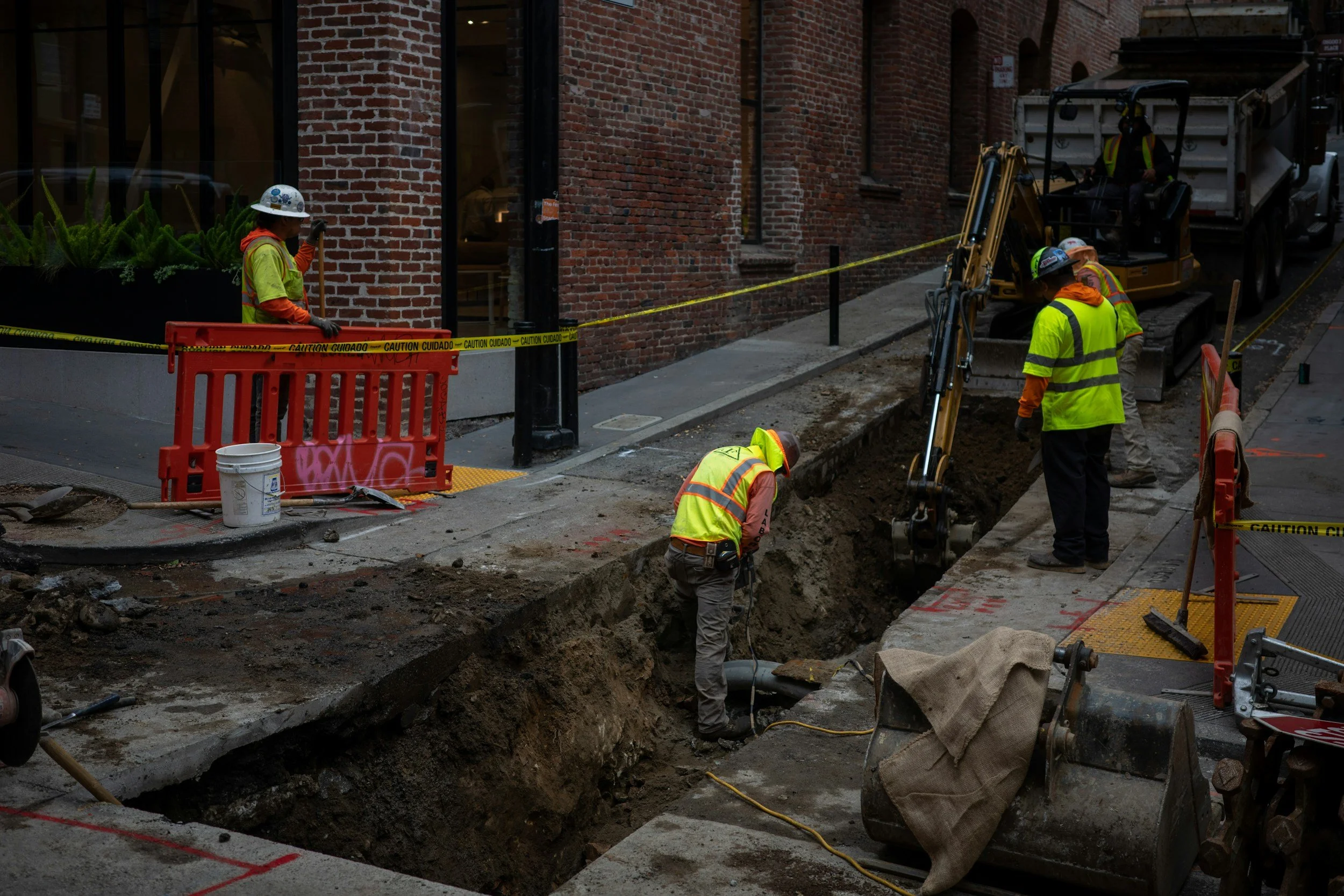
TLDR: A Toronto lot needing a new water service and a new sewer connection carries $20,603.22 in published City fees before anyone digs on your property, and not one dollar of it is negotiable. The private side runs $600 to $700 per metre. The parts that actually vary are hydro and gas, and the part that hurts most is timing.
There is a specific moment we watch homeowners go quiet. They have bought the lot. They have a budget they feel good about. Then someone says the word servicing, and a number lands late, after the land is already paid for.
What Most Homeowners Get Wrong About Servicing
Two things, and they compound each other.
The first is thinking servicing is a line item you can shop. It is not. Servicing is costed by the utility providers themselves, so there is no lower price to ask for and no second quote to go get. This is the one part of a build with no competitive bid, which is backwards from what people expect after collecting three quotes for everything else.
The second is assuming water and sewer is where the uncertainty lives. It is the opposite. That side is pretty cut and dry, because the City publishes what it charges. The real variability sits in hydro and gas, and almost nobody budgets for it.
The City’s 2026 numbers, which anyone can look up
These are the published City of Toronto rates for 2026, and they apply the same way from Leaside to Long Branch.
New 19 mm (3/4 inch) water service and meter: $5,884.44
New 25 mm (1 inch) water service and meter: $6,818.29
New sanitary sewer service connection in the road allowance: $14,718.78
Reuse of an existing 19 mm to 25 mm water service: $367.13
Inspection fee for reusing a City sewer connection up to 150 mm: $735.81
Disconnecting a water service 25 mm or smaller: $1,739.74
Disconnecting a sanitary sewer connection: $1,816.50
A house needing a new water service and a new sewer connection is $20,603.22 in City fees alone, regardless of which builder you hire.
The storm connection you were told to budget for is not allowed
This one catches people, including people in the trade. Under Chapter 681 of the Toronto Municipal Code, a storm connection from a property cannot be made to the City storm or combined sewer system. It is a prohibition, not a fee.
Stormwater has to be managed on your own lot. A connection is the exception and needs an approved exemption, granted only where keeping water on site would create a hazard or is genuinely not feasible, for reasons like interior downspouts, heritage restrictions or tight setbacks.
So a standard house gets one sewer connection, not two. The City does publish a residential storm fee, the same $14,718.78, but that line is for exemption cases. If your servicing estimate has a storm connection in it, ask which exemption it is being applied for.
The real budget effect is that stormwater moves onto your lot and into your design: grading, infiltration, and where roof water goes.
The private side, and the number that lets you estimate it
City fees stop at the property line. Getting water and drains from there into your basement is private work, and it runs $600 to $700 per metre, moved by the length of the run, the size of the supply (3/4 inch or 1 inch), and the depth of the service.
That rate is why private side work usually lands between $10,000 and $20,000. It covers the excavation to dig down, set the proper slope, and run the supply and drain lines from the basement out to the existing connections.
The two reuse questions worth up to $19,500
Here are the only real savings available.
Depending on where you are in the city and whether your services have already been upgraded, you can ask Toronto Water to review your current infrastructure and tell you whether it can be reused. If the existing service is already 3/4 or 1 inch copper, reuse costs $367.13 instead of $5,884.44 for a new one. We have done this a few times and saved clients the full $5,500 in supply upgrade fees.
The sewer side has its own version. Reusing an existing City sewer connection up to 150 mm carries a $735.81 inspection fee rather than the $14,718.78 install. On a lot where the old house had serviceable connections, those two questions are the highest return phone call you can make.
Hydro and gas, where the number really moves
For gas, the driver is where the connection sits on the road. A main on the far side of the street is a different project than one at your frontage, and you do not get a say.
For hydro, it comes down to what the infrastructure on your road can support, whether it can carry 200 amps or more, and whether the service is underground or overhead.
Toronto Hydro has a standard disconnection fee of roughly $700. If upgrading is needed, they now run a different process: a $2,000 deposit for their engineering department to review the job and quote it. We have one in review right now, so we can tell you the deposit buys a real number, and not yet what that number will be.
On the private side of the meter, expect $3,500 to $4,000 for a 200 amp panel set up, and a couple of thousand to run gas lines after the meter. Those rates are fairly standard.
Who Pays, and the Deposit You Should Assume Is Gone For Now
The homeowner pays for all of this directly. A builder cannot put it on their own account, because it has to be the registered property or account holder paying for the permits and utility upgrades.
The client also carries the road damage deposit and the curb cut. Budget for that deposit as though it is spent. It is a pain in the backside to get back.
The BVM Approach: Get Servicing Off the Critical Path
Servicing does not surprise us anymore, because we have been burned one too many times. What changed is not cheaper numbers. It is starting the process early enough that it is never the thing holding up a start.
Here is the calendar right now:
Enbridge: three months or more to coordinate. This is the longest lead time of the three, every time.
Toronto Hydro: three to four weeks for disconnections on a new home. Sometimes less, but budget more, because they take their sweet time.
Toronto Water: the shut off is easy to schedule. The upgrade work takes longer to coordinate, so budget at least three months. It is not critical to starting the project.
That order matters. Chase Enbridge and hydro first. Water is not what stops you breaking ground.
Disconnections are where we have made up the most time
Gas disconnection is the step most likely to slip, and the one we have put the most effort into getting good at. We have worked out a process that moves it faster for our clients, and most of it is unglamorous: opening the file earlier than feels necessary, knowing who has to act at each stage, and staying on it rather than waiting for a callback.
If you are running this yourself, start it sooner than you think you need to and keep a standing check on it, because a disconnection that slips two weeks moves everything behind it.
It comes down to planning properly and understanding the nuances of building in Toronto.
Key Takeaways
A Toronto lot needing a new water service and a new sewer connection carries $20,603.22 in published City fees before any private work.
A storm connection is prohibited by default. Under Chapter 681 stormwater has to be managed on your lot, so a house gets one sewer connection, not two. Plan for on-site stormwater instead.
Toronto Hydro now charges a $2,000 deposit just to have its engineering department review an upgrade and quote it. That is money spent before you know the number.
Private side water and drain work runs $600 to $700 per metre, driven by length, supply size and depth.
Ask Toronto Water whether your existing water service and sewer connection can be reused. Together those two questions are worth up to $19,500.
You cannot shop servicing. The only lever you have is starting early, and knowing the private side rates before you agree to them.
Frequently Asked Questions
Can I get a second quote on servicing to bring the price down?
No. Servicing is costed by the utility providers, so there is no negotiating and no competitive quote to go get. The only place you have control is the private side, and even that runs to fairly standard rates. Anyone promising to beat a City connection fee does not understand what they are quoting.
How early do I need to start servicing applications?
Start with Enbridge and Toronto Hydro as soon as you have a plan you are committed to. Enbridge needs three months or more, hydro disconnections take three to four weeks, and Toronto Water needs about three months for upgrade work, though it will not hold up your start.
Do I need a storm sewer connection for my new build?
Almost certainly not. Under Chapter 681 of the Toronto Municipal Code a storm connection from a property cannot be made to the City storm or combined sewer system, so stormwater has to be managed on your own lot. A connection is the exception and needs an approved exemption. If a servicing estimate you are holding includes one, ask which exemption it is being applied for.
Getting the Number Before You Need It
Servicing is one of the few costs in a Toronto build almost entirely outside your control. The homeowners who get hurt are the ones who found out after closing on the land.
We price it into a preliminary budget before drawings are finished, so the number lands while you can still act on it. If you are looking at a lot, book a call with our team and we will walk you through what your specific street is likely to require.