TLDR: CMHC's November 24, 2026 report found that 30% of Ontarians aged 25 to 34 live with at least one parent, against 23% nationally. Shelter costs and rental conditions explain about three quarters of the roughly 70,000 households young Ontarians would otherwise have formed. Toronto now allows up to four homes on most residential lots, so parents and adult children, or two or three co-buyers, can share one purchase. A basement apartment runs $200,000 to $300,000, and a 1,200 square foot garden suite $500,000 to $700,000 including HST. Below are five ways in, the prices we give GTA families at BVM, and a Midtown multigenerational duplex we scoped in 2025.
Why 30% of Ontarians aged 25 to 34 still live with a parent
CMHC puts most of it down to shelter costs and rental conditions. Kevin Hughes, CMHC's Deputy Chief Economist, compared how many young adults headed their own household in 2001 and in 2021. In Ontario, the share of 25 to 29 year olds heading their own household fell from 36.4% to 30.8%, the steepest decline of the large provinces, while Quebec's rose. Rising incomes added about 22,300 households and more university degrees about 17,800, but shelter costs and rental conditions took away about 52,500. In CMHC's words, the drop "reflects a constraint on housing choice."
Four units on most Toronto lots, and a garden suite you can't sell separately
Toronto permits up to four units on residential lots across the city, and since June 2025 up to six in the Toronto and East York district and Ward 23, Scarborough North. Multiplexes are exempt from the floor space index limit, need no parking, and in most cases pay no development charges up to four units. Mississauga allows fourplexes as of right.
One rule families miss: Toronto does not permit a severance that puts a house and its garden suite on separate lots, so the suite can never be sold on its own. An adult child who pays into one has no share on title unless a lawyer papers it.
What we tell clients to plan for:
Legal basement apartment: $200,000 to $300,000
1,200 sq ft garden suite or laneway suite: $500,000 to $700,000 including HST
Triplex, fourplex or sixplex conversion: $350 to $500 a square foot
Five ways in, priced from $200,000 for a basement unit
1. Buy one bigger house together and split it by generation
Parents and an adult child's family pool what they have, buy one house and turn it into a duplex or a fourplex with a unit for each household. The younger family can go on title for a share of the property.
If either generation has to sell a house to fund the new one, run the transaction costs first. Buying in Toronto means paying both Ontario's and the City's land transfer tax, about $73,000 together on a $2 million house, before legal fees and the commission on the house being sold. We have seen families run those numbers and find the math does not hold up. If the parents already own a house worth building on, ways 3 and 4 skip the second purchase entirely.
We scoped one of these for a family in Midtown in 2025: a roughly 1,200 square foot, two-bedroom unit on the main floor for the parents, and the younger family on the second and third floors, with a walkout balcony up top. The house needed a two-storey rear addition of about 6 metres, out to the 19 metre depth Toronto allows for multiplexes, plus underpinning so the basement could be finished later.
These are the projects we want to take on. They complement our experience with home additions and full interior renovations, and we start with a full analysis of the family and the property so the budget lines up with their goals. We have priced a lot of triplex, fourplex and sixplex conversions. Depending on the sizing, how much of the house is kept and the finishes, plan on somewhere between $350 and $500 a square foot. Put a written family agreement and a budget everyone has seen in place before design starts.
2. Buy a house that is already two units, and live in one
An owner-occupied duplex qualifies for an insured mortgage like a house: 5% down on the first $500,000 and 10% on the rest, up to $1.5 million, with a 30-year amortization for first-time buyers. On a $1.4 million legal duplex, that is $115,000 down, with the insurance premium usually added to the mortgage, and CMHC lets lenders count the second unit's rent toward qualifying.
The catch is the word "legal." Listings rarely say "legal basement apartment" unless the unit actually is one. If a listing calls it a nanny suite, or shows a second kitchen with no mention that it is legal, treat that as a red flag and budget for all the work and permits to make it a legal duplex. Ask for the permit history before you firm up; it doesn't hurt to ask. Our post on legal duplex requirements covers what the City looks for.
3. Parents build a garden suite or laneway suite
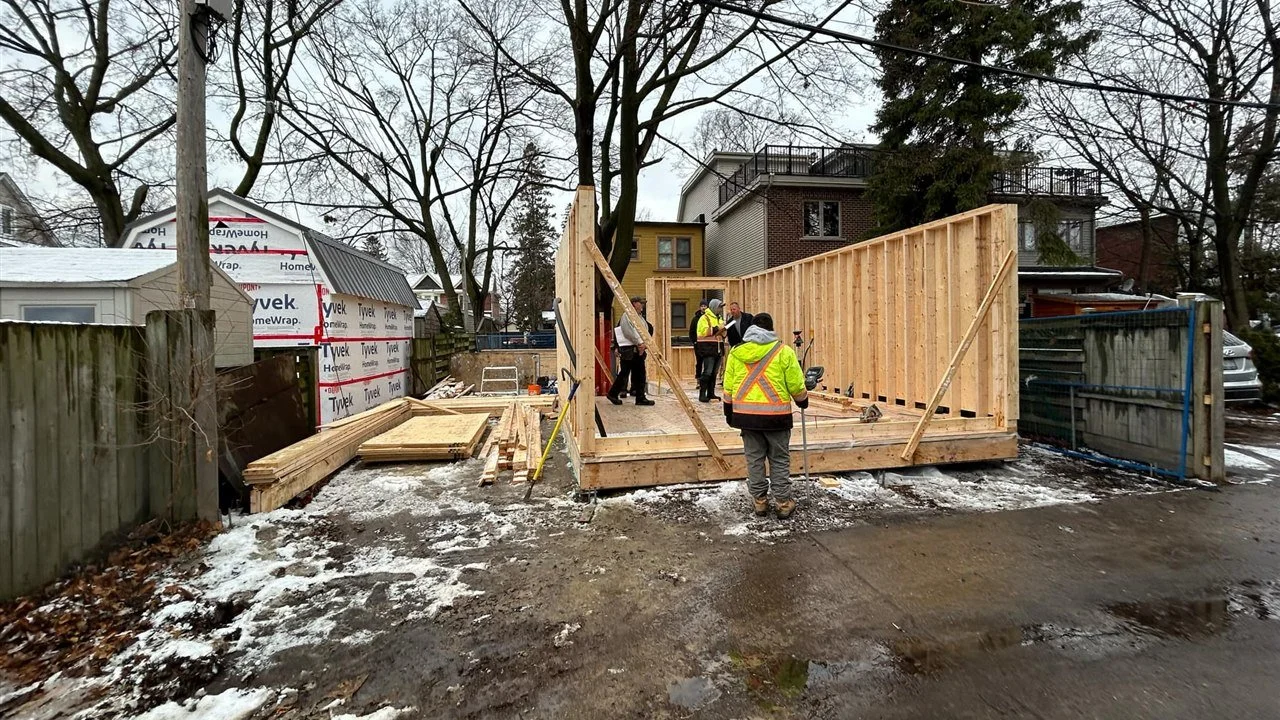
Every garden suite and laneway suite we have completed in Toronto and Durham has been for a multigenerational family. If the parents already own the lot, there is no land to buy. For a 1,200 square foot garden suite or laneway suite, plan on somewhere in the $500,000 to $700,000 range including HST, depending on final finishes, final sizing and permitting.
Fire access comes first: the City wants a fire truck within 45 metres of a hydrant and no more than 45 metres from the suite's door, or 90 metres with one added measure such as interconnected alarms. Our post on building a garden suite on your parents' property goes further.
4. Buy a single-family house and convert it to a duplex
The buyer, or two or three co-owners, buys a single-family house and converts it so each household has its own unit, entrance and fire separation. The second unit's price depends on how much of the rest of the house gets opened up. If it is just a basement apartment, we tell clients to expect anywhere between $200,000 and $300,000, and it climbs with an addition or a gut of the floors above.
CMHC's secondary-suite refinance can fund it: up to 90% of what the home will be worth once the unit is built, if that value is under $2 million, an owner or close relative lives there, and no unit is rented out for less than 90 days at a time.
5. Buy with friends or siblings, with the exit written down first
We have not seen many friends or siblings buy together. It is a fringe solution, and it only works if the people involved are genuinely close, but it can get them into the market and into the space they need. Each first-time buyer can save up to $40,000 in a First Home Savings Account and withdraw up to $60,000 from their RRSP under the Home Buyers' Plan, so two people can bring up to $200,000 before anyone's parents contribute.
Co-buyers can hold title as tenants in common, with shares that match what each person put in. Sign a co-ownership agreement before the offer goes in that says how a buyout is priced and what happens if someone leaves. Every name on the mortgage owes the whole mortgage.
Why we check the zoning map against the house before you firm up
Every option above turns on two questions: can this lot legally hold the homes you want, and what will they really cost? Zoning comes first because it makes or breaks these purchases. The Toronto zoning map is accurate around 90 to 95% of the time, and the rest is unpermitted additions, sheds and garages that show up on site but not on paper. We compare the map with the actual house, check coverage, height, trees and fire access, then build a price range, ideally before you firm up an offer. If it does not fit, we would rather be the bearers of bad news before you buy than after.
When renting downtown is the better call
If you are young and have a good job downtown, renting is a very reasonable option right now. These are ideas, not a plan for everyone, and which one fits depends on your situation, how close you are with your family, and your goals for the next few years.
They make sense when you are ready to settle down or start a family and a condo cannot give you the space. A lot of the time, getting that space means looking well outside the city, which is a deal breaker for a lot of young professionals. These options can get you the space in prime areas of Toronto without having to leave. If your family or group cannot agree on a written exit plan, do not do it.
Ask to see the permits: three questions before you firm up
Is the second unit permitted, and can I see the permits? A bad answer: "It's been rented for years and nobody ever complained."
Will what we want work on this lot? If the answer is always yes, you are probably talking to the wrong builder, or the wrong agent.
What is the price range before I pay for drawings? If the number only arrives after design, you are paying for drawings before you know you can afford them.
Key Takeaways
CMHC found 30% of Ontarians aged 25 to 34 live with a parent, and that shelter costs and rental conditions explain about three quarters of the households young Ontarians did not form.
Toronto permits four units on residential lots citywide and six in Toronto and East York and Ward 23.
A legal basement apartment runs about $200,000 to $300,000, a 1,200 square foot garden suite about $500,000 to $700,000 including HST, and a multiplex conversion $350 to $500 a square foot.
A garden suite cannot be severed, so an adult child who pays into one has no share on title unless a lawyer papers it.
An owner-occupied legal duplex is insurable with $115,000 down at a $1.4 million price.
Frequently Asked Questions
Can my parents sever their garden suite and sell it to me? No. Toronto does not permit a severance that puts a house and its garden suite on separate lots. If you are putting money into a suite on your parents' land, have a lawyer put your share in writing before you pay in.
Can I buy a house with friends in Ontario? Yes. Co-buyers can hold title as tenants in common, with shares matching contributions, and sign a co-ownership agreement covering buyouts and exits. Every borrower owes the full mortgage, not just their share.
How much does it cost to add a second unit in Toronto? A basement apartment typically runs $200,000 to $300,000. A 1,200 square foot garden suite or laneway suite runs about $500,000 to $700,000 including HST, depending on finishes, sizing and permitting.
Find out if your lot can hold a second unit before anyone signs
For your parents' house in the GTA, or one you want to buy with family or friends, book a no-obligation virtual consultation with our family team to hear what a basement unit, garden suite or duplex conversion like yours costs. If the numbers look close, a Feasibility Session goes over the scope and budget, looks deeper at the zoning, and answers whether the project is feasible.
Related Reading
About the author. Ryan Meagher is Pre-Construction Manager at BVM Homes, the Toronto home addition and renovation company his family started in 1997. He has been quoted on renovation costs and planning by Fortune, CBC News and the Toronto Star. More about Ryan.