TLDR: We are the wrong builder for your home addition if you plan to live in the house while we build, if you want a cost plus contract, if price is the only thing you are hiring on, if you do not want to spend time building an accurate scope, or if you will not work in the project software our whole team uses. Each one is a real policy with a reason behind it. Our discovery call is 30 minutes, and that is usually enough time for both of us to know.
Five lines, stated plainly
Most builder websites suggest they suit everyone. An addition in the GTA runs to hundreds of thousands of dollars and most of a year of your family's life, so the more useful thing a builder can tell you is who they don’t work with. Here is our list.
You need to live in the house during construction. We have a zero-tolerance policy on this for home additions.
You want cost plus. We only build fixed price.
Price is the only thing you are hiring on. We will not be the cheapest quote.
You do not want to answer a lot of questions. An accurate scope takes time but creates very accurate budgets, so if you aren’t willing to answer a ton of questions about your needs and wants then we aren’t the right team.
You will not use our project software. Budgets, change orders, photos and messages live in one platform, and everyone on the project works in it. If you don’t want to adopt the use of a technology that streamlines your project and consolidates communication into one portal then we aren’t your builder.
If one of these is a deal breaker, the rest of this article explains why we hold the line, so you can decide whether the reason matters to you.
The BVM approach: we say it on the first call
We say it plainly. Most families who reach out to us already know why they are calling. They want transparent and honest advice about their project, and they have been getting nowhere with companies that ask for premature commitments and add no value upfront. Most of our discovery calls end with enough of a fit to move to the next step, which is zoning and scoping.
A few calls go differently. Every question is about cost, and then about cost again. When that happens we ask one question back: what are you looking for in your builder? If the answer only centers on cost, we tell the family we will not be a good fit for their project. It is a short conversation, and it is kinder than a long one six months later.
Living in the house while we build
This is the line families push back on hardest, so here is a real one.
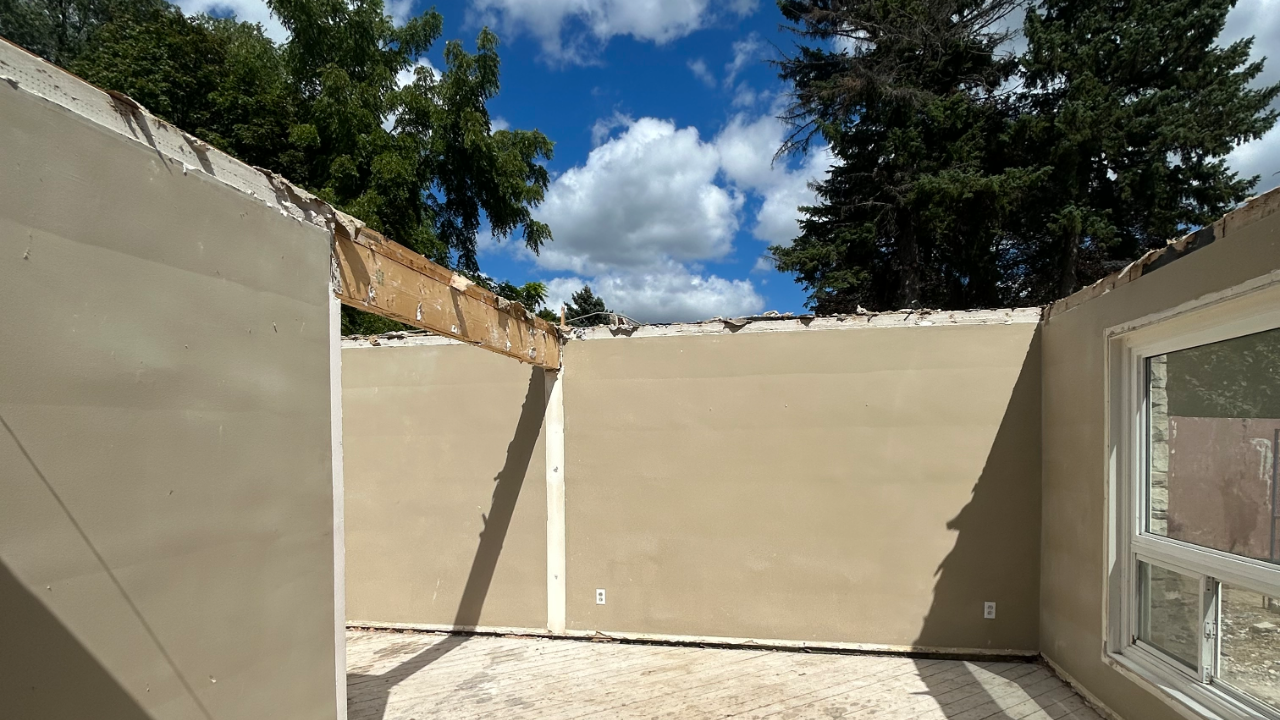
A family came to us recently for a second storey addition, the kind where the roof comes completely off. They were adamant that other builders would let them stay in the house during construction. Another builder had told them it was possible, and one of their friends had done it. We had a frank conversation about our zero-tolerance policy and the reasons behind it: the stress, how hard it is with kids, and safety, because no matter what anyone does, the house is going to be a construction zone. Services go off at points. The kitchen and bathrooms are out of use for long stretches. Trades are working across every floor.
They did not budge, and we did not argue. Their mind was made up.
What would have gone wrong if we had said yes is not a mystery. The family is under stress the entire time, and stressed families start micromanaging the project. It feels helpful to review everything every day. It is not. With a good builder, the team already knows what changes need to be made and what work needs to be done. A family on site all the time, picking apart every aspect of the project, slows the job down and makes it worse.
The honest downside
Moving out costs real money. Rent for a family in the GTA runs $3,500 to $4,000 a month, and an addition means roughly six months of it, so plan for $21,000 to $24,000. That belongs in the project budget from day one, whether the house is a bungalow in Scarborough or a semi in East York. Our position is blunt: if you cannot afford to relocate, you should not be doing the project yet.
Wanting a cost plus contract
We only use fixed price. On a fixed price contract, the risk of an incomplete scope sits with us. If we miss something, it comes out of our margin. Five change orders in our own system are exactly that, our misses, and none of them were billed to a client.
Cost plus moves that risk to you. It has a narrow place on investor projects and some larger custom builds, where the scope genuinely cannot be locked early. For a family adding to the home they plan to stay in, we do not think anything but fixed price is defensible. If you want to start before the scope is priced and settle the number as you go, another builder will suit you better. The full reasoning is in our fixed price vs cost plus article.
Hiring on price alone
We tell families up front that we will not be the cheapest quote, because we quote everything correctly from the start, using an actual database of past and current projects. Families have walked away over it many times.
When people see the real numbers, one of two things happens. They go silent, or they ask questions: where the numbers came from, and what adjustments to the scope would make the project work for their budget. That exercise is qualification in itself. The second group are our clients. They do not take the budget to another builder and hope for a better price. They learn why the cost is where it is, and then we value engineer the scope together until it fits.
Not wanting to put the time in
We are an education first builder. We love it when families come to us with questions, because we have nothing to hide, and we ask a lot of questions back. We price against the materials and finishes you actually select, not placeholders, and that takes your answers. That legwork is how an accurate scope of work gets built.
If you would rather hand over a sketch and get a number back without that conversation, we are the wrong builder. The number would be a guess, and a fixed price built on a guess is not worth signing.
Not using the project software
We are a technology heavy builder, on purpose. It does not mean no phone calls and no site visits. Those carry on. It means the budget, every change order, the site photos and your messages sit in one platform, and when you ask a question, the whole team sees it rather than one person's inbox. The software is intuitive, and we help every client learn it.
We know the other version because we lived it. When we first moved everything into our project management system, some clients were already mid build and did not want to learn it. Those projects ran late, the information scattered across email threads, and the change orders and purchase orders became very difficult to track, for us as much as for them.
Home building is not perfect. There will be adjustments and problems that need solving. Would you rather have all of that happen in an already messy inbox, or in its own platform? From experience, keeping it separate is far more valuable and efficient. If your family will not work that way, we are not the right fit.
What most homeowners get wrong
They treat the first meeting as the builder's audition and forget to listen for what the builder refuses. A builder who agrees to everything at the first meeting (stay in the house, any contract you like, the lowest number on the table) costs themselves nothing by saying yes. The cost of that yes shows up once the roof is off, and it lands on you.
What to ask any builder, including us
"Can we live in the house during construction?" If the answer is yes, ask what happens on the days the water, power or heat is off, and where the kids sleep when the roof is open.
"Is the price fixed, and what happens when you miss something?" Listen for who pays for the builder's own mistakes.
"Where did this number come from?" A good answer points to real past projects and real trade quotes. A bad one is a square foot rate and a shrug.
"Where will our messages, change orders and photos live?" If the answer is text and email, ask how anyone finds a decision from three months ago.
"Who have you turned away, and why?" A builder with no answer has decided to be right for everyone.
Key Takeaways
We do not let families live in the house during a home addition. Budget $21,000 to $24,000 for about six months of GTA rent from day one.
We only build fixed price, so our misses come out of our margin, not your budget.
We will not be the cheapest quote. The families who ask where the number came from, rather than shopping it, are the ones we build for.
An accurate scope takes your time. If you want a number without the questions, we are the wrong builder.
Every client works in our project platform. Phone calls and site visits continue; the paperwork does not scatter.
A 30-minute discovery call is usually enough to know, on both sides.
Frequently Asked Questions
Can we live in our house during a second storey addition?
Not with us. Once the roof comes off, the house is a construction zone, with services off at points and trades on every floor. It is unsafe, it is very hard with kids, and it slows the work. Plan on about six months elsewhere and put the rent in the budget from the start.
Why is your quote higher than other builders' quotes?
Because it prices everything from the start, against real past and current projects, instead of leaving gaps to fill later. Ask us where any number came from and we will show you, and we will work through what can change in the scope to bring it closer to your budget.
Do we have to use your software if we prefer phone calls?
You will still get phone calls and site visits. What we ask is that decisions, documents and messages go through the platform, so the whole team sees them. We teach every client how to use it.
Find out in 30 minutes
If you read this list and none of it put you off, book a no-obligation 30-minute consultation. We will tell you honestly whether we are the right builder for your project, and if we are not, we will say so.