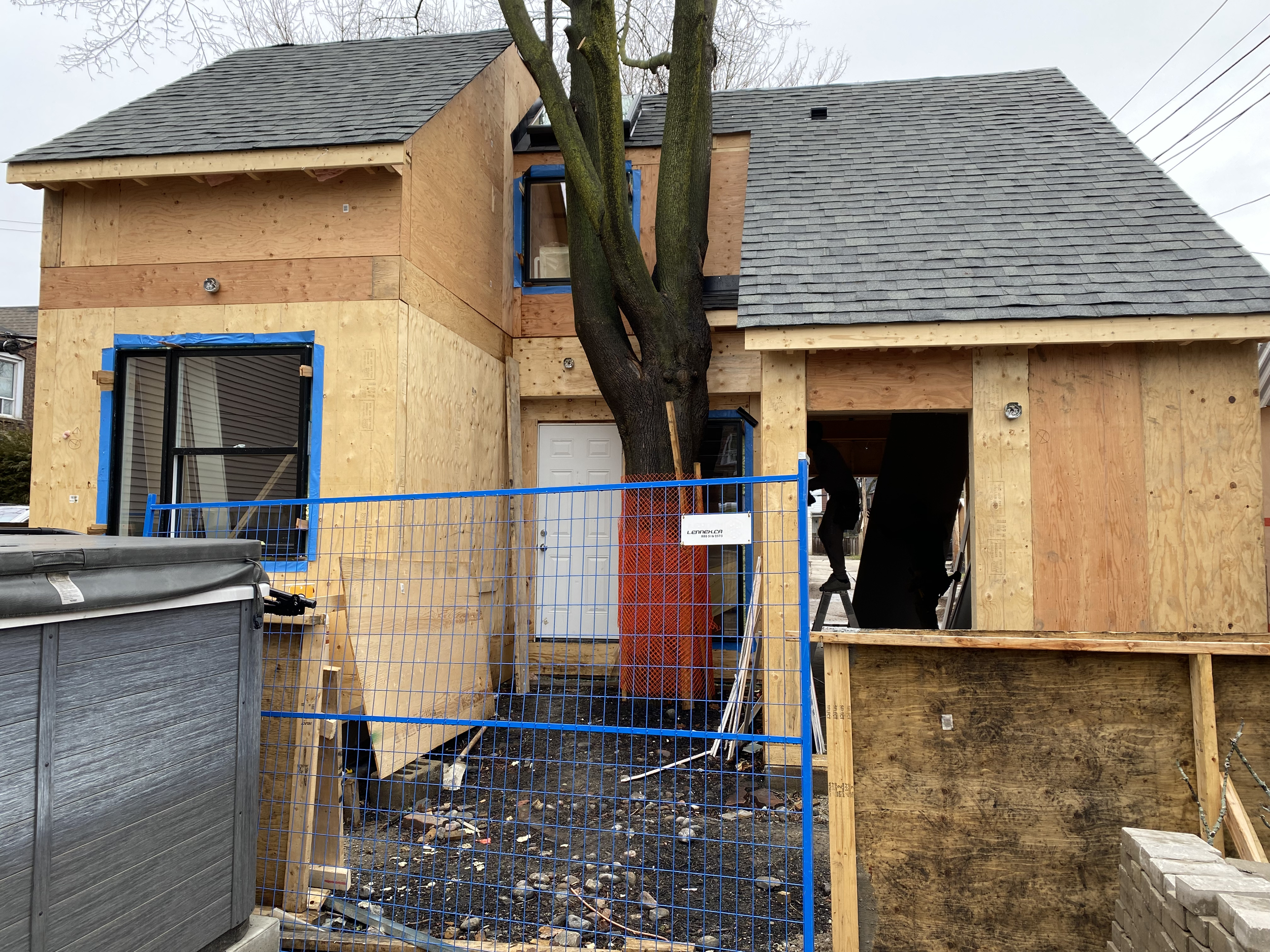
TLDR: At a preliminary estimate, hold 5% to 10% of the budget as contingency. After a proper pre-construction stage, with the engineer and trades on site, every line procured at a fixed price and the finishes selected with an interior designer, that number can get close to 0%. Across our contracts, the things we uncovered during construction came to about 0.6% of contract value. Most of what gets added to a project is chosen by the homeowner, and that is a different pot of money.
The question we hear on almost every first call
A couple tells us they have their number and they are "keeping 10% aside, just in case." It is a good instinct and a fine place to start. It is not an absolute necessity with the right builder.
How much home addition contingency you need in Toronto depends on one thing: how much about your project is still unknown on the day you sign. Here is how we size it by stage.
A calculator or ballpark number: add 10% on top. Nothing has been measured, priced or opened up.
Preliminary estimate: hold 5% to 10%. At that point we do not know the finish level, and we have not uncovered anything about the existing conditions of the house. With existing homes, there is a lot to be uncovered and dealt with.
Fully procured contract: close to 0% for unknowns, once the engineer and the trades have walked the house, the lines are fixed-price quotes and the selections are made and specified on the drawings.
That last figure only happens when the pre-construction and design process is done properly.
What most homeowners get wrong about contingency
Most people treat contingency as protection against the house. Something bad is hiding behind the plaster in a 1920s East York semi, and the 10% is there to pay for it.
Our ledger says the house is rarely the problem. Across 102 approved change orders on our projects, 81% of the dollars added were decisions our clients made: a better roof, a different cladding, more scope than was first agreed. Site conditions, the things nobody could see until the walls came off, came to about 0.6% of contract value.
So the money most homeowners hold "just in case" ends up paying for choices made late. On our Glen Road addition, the client moved from shingles to a slate metal roof and from stucco to precast, mid-project, by choice. Those decisions drove that job's change orders. Nothing was wrong with the house.
Things picked at the last minute end up being more expensive. The same decision made at a kitchen table six months earlier is just a line in the budget.
What our change order ledger shows about variance
The spread between our projects is the useful part. At the start of 2026 we changed how our pre-construction stage works: interior designers became part of it, and we started challenging our clients to make their selections before construction instead of during it. We brought the design into BVM, so we now run more like a design-build firm, assembling the project team and the vendors for the client.
Jobs planned before that change ran between about 4.5% and 13% in change orders against the contract price. Five jobs that went through the new pre-construction stage, priced and selected before anyone broke ground, sit between 1.4% over and 0.6% under their contract price so far. The exception is Glen Road, for the reason above: upgrades the client chose mid-build.
Five change orders in our system are our own misses, things like a masonry opening we did not price and attic spray foam that should have been in the original scope. None were billed to the client. On a fixed price contract, our mistake is our problem, which is exactly why we work so hard to find those items before we sign.
The BVM approach: plan the contingency out of the budget
The goal of our pre-construction process is to get the contingency as close to 0% as possible. We do not carry a contingency line in our budgets at all. Here is what replaces it.
The structural engineer and the trades on site before the price
Our structural engineer and our subcontractors walk the house during pre-construction, not on day one of demolition, so the people pricing the work have seen what they are pricing. Every line is then procured at a fixed price, and the budget reflects real quotes rather than a builder's guess.
An interior designer in the pre-construction team
In most things, the devil is in the details, and that is the interior designer's job. An architect or draftsperson usually does not go to that level of detail. Some scope sits in between the line items of a construction budget: the tile layout, the niche, the trim profile, the lighting plan. The interior designer settles it and puts it on the drawings.
Clients also deal with decision fatigue, and they do not know what they do not know. A designer working alongside the builder helps them make real selections, connects them with the right vendors, and gives us true pricing for every finish in the house. Ideally the designer works as part of the whole team, with the structural engineer, the architectural partner, the mechanical designer and us.
This is how we avoid the back-and-forth nonsense that happens in construction. The more of those conversations we have before the project starts, the less variance in cost you will see.
Six months to plan, eight to twelve if you can
Give yourself an absolute minimum of six months to plan and budget an addition. Eight to twelve months is better. It gives us time to drill into the details and finalize as much as possible, and it gives you time to shop for your finishes without being rushed into them. It also puts the project well ahead of the permitting and waiting that has to happen with the City of Toronto, which on its own can run for months.
Named open items instead of a blanket percentage
Where something genuinely cannot be settled before construction, we name it as its own line in the budget and make it clear it needs to be sorted out sooner rather than later. A blanket 10% sitting at the bottom of a budget tells you nothing. A named line tells you exactly what is still open and who has to decide it.
Some clients are more receptive to closing those items in pre-construction than others. It is not a perfect science. Not every project is perfect, and any builder that says otherwise is a liar.
Who should still hold 10%
Plenty of homeowners should hold the full 10%, and we tell them so.
If you want to start construction in a few weeks and skip a proper pre-construction stage, keep 10% or more. Nobody has looked at the house yet.
If you plan to choose your finishes once the walls are up, keep 10%, and expect to use it.
If your contract is built mostly on allowances and estimates rather than fixed-price quotes, the unknowns are still yours.
The honest downside of our approach is time and up-front cost. Six to twelve months of planning, a pre-construction fee and consultant fees all come before a single shovel goes in the ground. If that feels like too much, we are probably not the right builder for your project.
What to ask any builder about contingency
Before you sign with anyone, including us, ask these:
Which lines in this budget are fixed-price quotes from the trades doing the work, and which are allowances or estimates?
Have your structural engineer and your trades been inside the house yet?
Who specifies the finishes, and when do we make our selections?
What is still open in this budget, and is each item named?
If you missed something in the scope, who pays for it?
A bad answer sounds like "we will figure that out when we open it up," or a single contingency line the builder controls with no explanation of what it is for.
Contingency is not your upgrade money
A contingency covers what nobody could see. It should not be what pays for your upgrades. You should never start a project nearly or fully capped out on your total budget. Keep enough aside to invest in a nicer fridge or spend a little more on tile. The build is far less stressful when you are not counting every dollar and living in fear of what might be uncovered.
Key Takeaways
Hold 5% to 10% contingency at a preliminary estimate, when the finish level and the existing conditions of the house are still unknown.
A properly run pre-construction stage can bring the contingency for unknowns close to 0%. On our jobs, site conditions came to about 0.6% of contract value.
81% of the dollars added by change order on our projects were client decisions, not surprises in the house.
An interior designer in pre-construction settles the details between the budget lines and puts them on the drawings, which is where most variance comes from.
Give yourself at least six months to plan an addition, and eight to twelve if you can.
Keep money aside for your own upgrades, separate from any contingency.
Frequently Asked Questions
How much contingency should I budget for a home addition in Toronto?
Hold 5% to 10% at a preliminary estimate. Once the project is fully procured at fixed prices, with the engineer and trades having walked the house and your selections made, the contingency for unknowns can come down close to 0%.
Does a fixed price contract mean I do not need a contingency?
It means the builder carries the cost of their own scope misses. On our projects, the five change orders that recorded our own misses were absorbed and never billed. It does not cover changes you choose to make, so keep separate money for upgrades.
Why does an interior designer reduce the contingency?
Because most added cost comes from details decided late. A designer specifies the finishes and the small scope items between the budget lines, so they are priced before construction instead of being decided on site.
Plan your addition before the trades arrive
If you are planning an addition in Toronto for next year, now is when the planning starts. Book a consultation and we will show you how our pre-construction stage takes a budget from a 5% to 10% contingency down to close to 0%, and what it needs from you to get there.